

Ant swarm
Beneath some stones the ground teems as soon as they are gone.
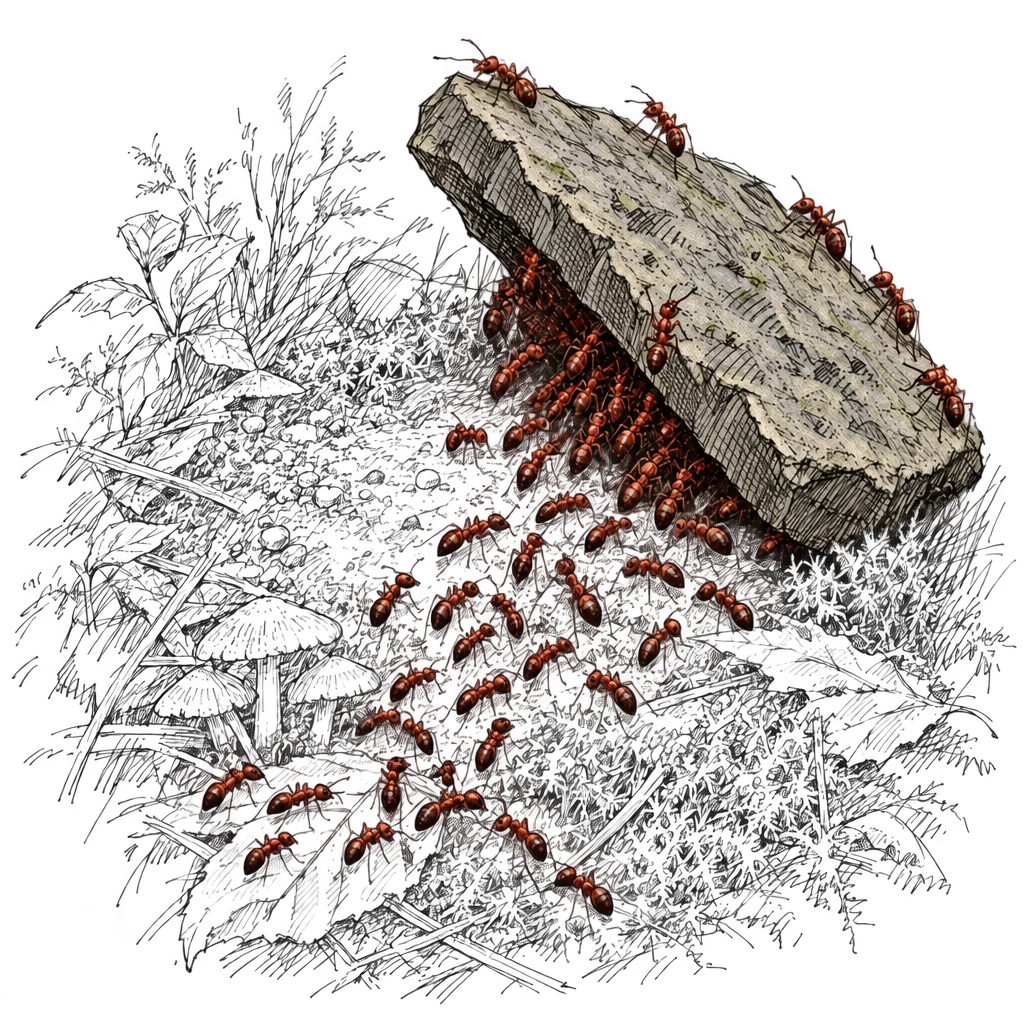
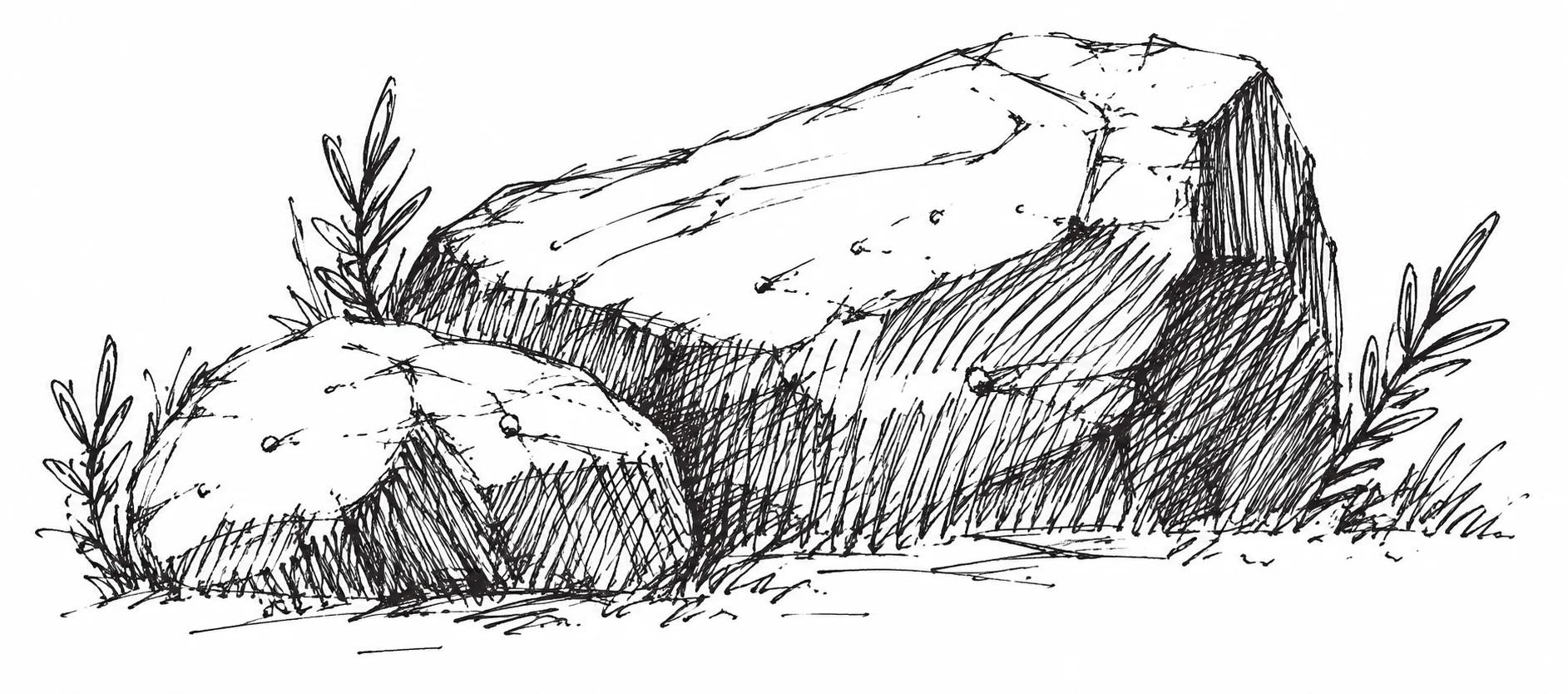
Lift a particular stone and a teeming mass of small red ants pours out from beneath it. Each one is tiny. Together they form a rust-red, twitching patch that slowly pushes across the ground. The swarm stays together this way until it disappears under another stone.
A new stone
A disturbed swarm does not return under its old stone, even when that stone is put back in place. It looks for a reachable stone nearby under which nothing else lives or lies, and moves there at an unhurried pace. At the goal the ants crowd together and vanish beneath it one after another. If that stone is carried away as well, they pour out again and keep searching. When there is no stone anywhere near, the swarm stays out in the open until one is set down close by again. When a biome conversion announces itself, a swarm out in the open heads for a stone outside the area. If the front catches it, only part of the ants remain; beneath its stone it is safe.
The danger of numbers
A single ant does hardly anything. The swarm is dangerous through its mass: at its thin edge a slime stays almost unharmed, in the dense core it quickly loses strength, and whoever lingers there does not survive. A larger body offers the ants more surface. When a creature runs straight through, the swarm clings to it for a moment. Ants do not hunt; they follow no one to bring them down.
On the way
Whatever lies close to their path often vanishes beneath the teeming mass: mushrooms, deadwood, a dropped package or a corpse. What the ants have eaten does not come back. They never linger long over food; their goal remains the next stone.
Below ground
Swarms live below ground too, in chambers of loose earth. When such a chamber breaks open, the ants pour out and move through the passages to another undisturbed chamber away from the nests, at times through the earth itself, where no one sees them. They do not bite through closed earth: whoever stands behind a wall is left alone.