


Burrow worm
A brief look out of the earth, then the surface is quiet again.
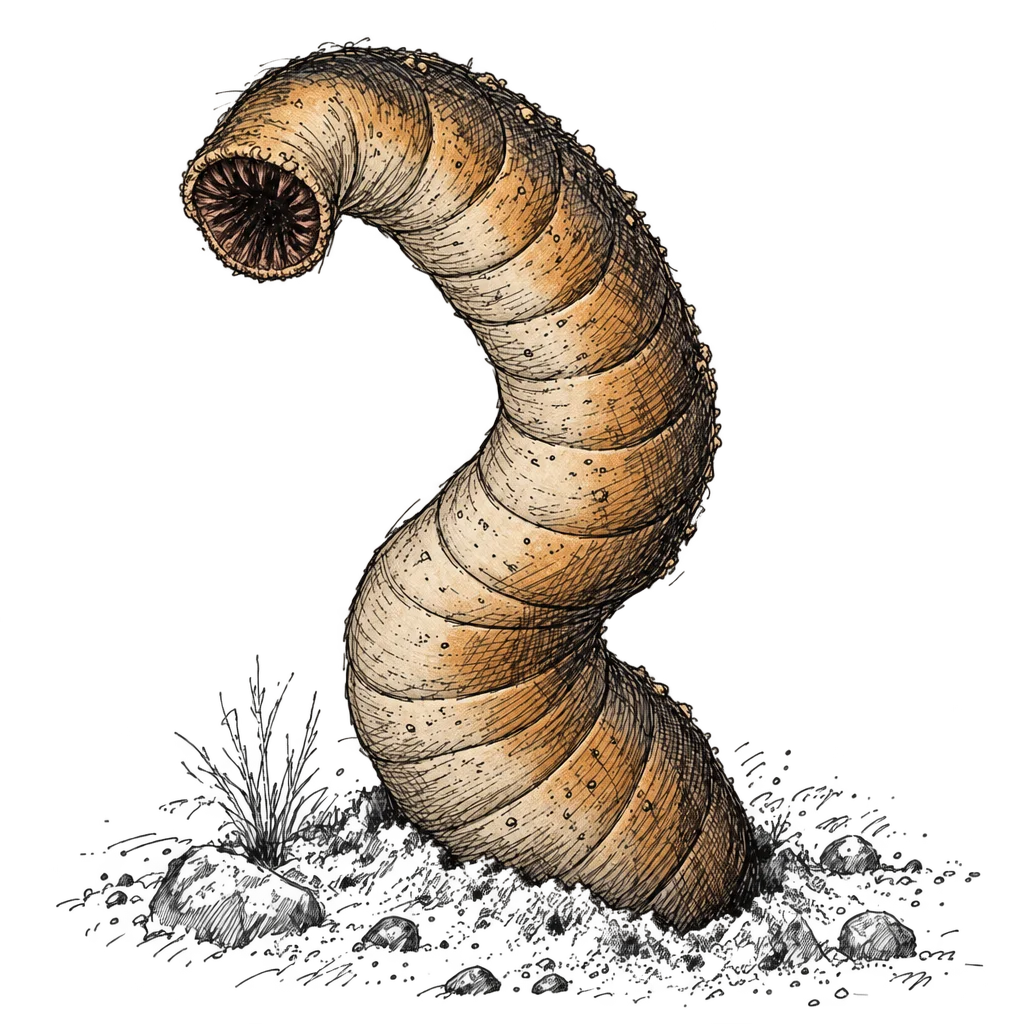
On open ground, a small pale worm sometimes peeks out of the earth. Its body wiggles above a tiny mound. Once it retreats, the mound slowly crumbles until the surface is unremarkable again. Occasionally it hops a short distance left or right. Loose crumbs of earth linger briefly at both the departure and entry spots.
A hidden inhabitant
The burrow worm is especially common on open desert ground, but also lives in forest clearings, cursed land and occasionally on firm swamp ground. Between its brief appearances it cannot be seen. Autonomous slimes and animals cannot detect its hidden position and do not automatically avoid it. Only its visible body can make them flee. Its hops are short; it does not pursue anyone across the landscape. Water and unsuitable ground make it rest. A stone lying on its spot keeps it underground as well, until someone carries the stone away again. Some worms have always lived under a stone. They stay at exactly that spot even when the stone is carried off, and a stone put back holds them down again.
A sudden snap
When a slime or animal steps onto its position, the worm shoots out and strikes it dead. The worm itself does not leap through the air: the blow briefly tosses the victim upward before it falls dead to the ground. As after other deaths, its body stays there as a corpse and decays over time. Observing its brief appearance can help you keep your distance or deliberately avoid the area. After a snap it retreats underground again.
While the worm visibly peers from the ground or snaps, a nearby slime can strike it in return. A full hit drives it back into its hole. Beneath the closed surface and during its leap it remains out of reach. A defeated worm does not return at that site.