

The surface: light, rain and territory
The surface changes sustenance and sight long before it blocks a route completely.
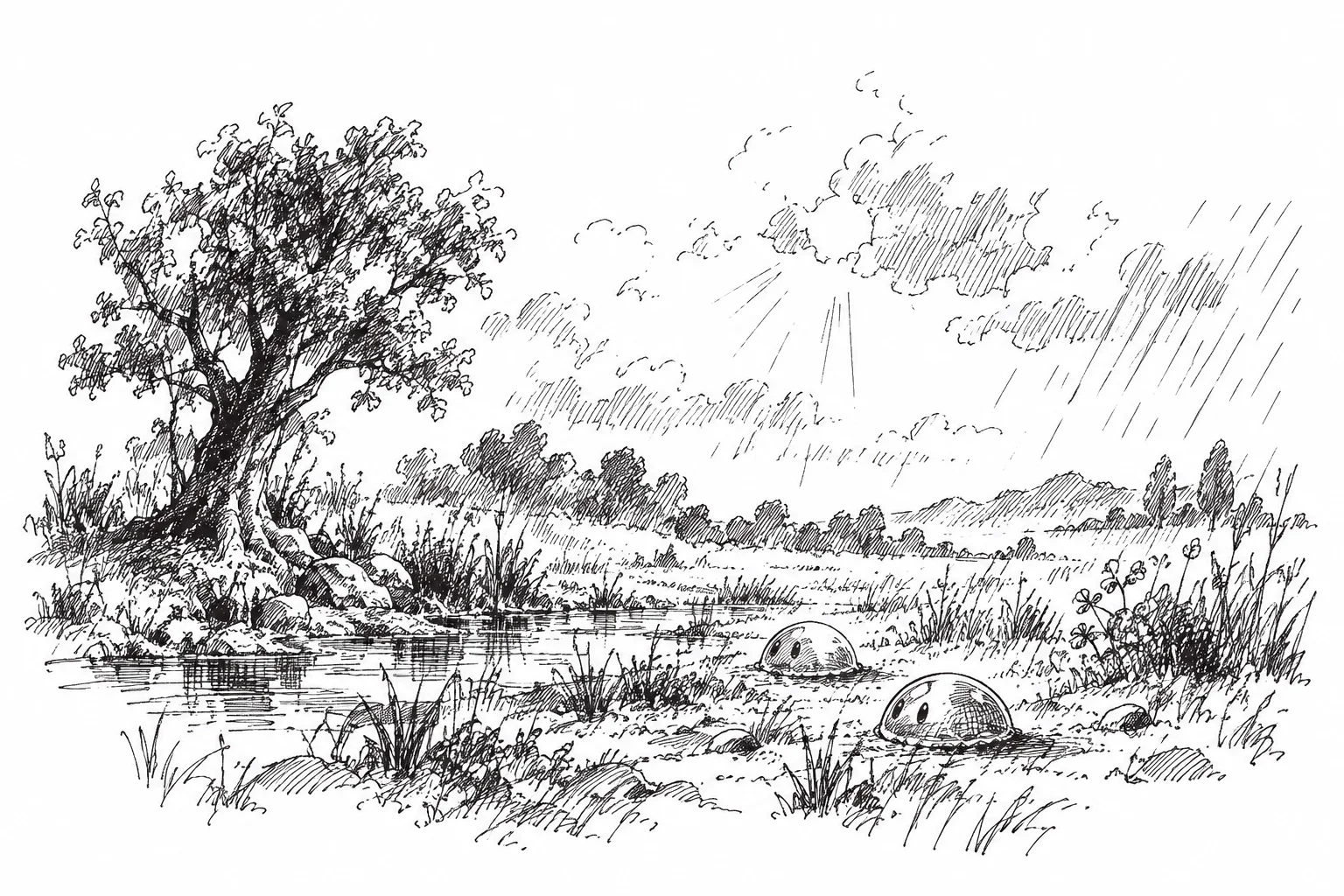
Day and night move across the map in a shared rhythm. Light, activity and species-specific dangers respond. Gloom suffer in sunlight, while some animals are more active at night or appear only then. Underground, this light cycle does not continue as a surface tint.
Rain is more than a visual effect. It changes humidity, helps Aqua meet their need for water and speeds the decay of some traces, including warning pheromone and temporary poison. Turning off visible raindrops in the options does not change the simulation.
Above land and water
On dry days, a bird occasionally passes in a gentle arc above the treetops. No new flights begin at night, in rain or across land that is being converted. Sometimes only its wing-beating shadow on the ground gives it away.
Local residents may wait beneath a still surface. Some changes first become apparent through a small movement.
Explored ground
Fog lifts permanently where your slimes reveal the surface. Each autonomously led species keeps separate knowledge of explored ground. A free observer camera or a revealing assistance view gives no place to a colony.
Territory and conversion
Nests can spread their biome into surrounding terrain. A conversion front gradually changes ground and decoration but protects water, entrances and clear access to them. It creates no new species: colony identity follows the nest, not the colour of the ground.
Ahead of the front
A conversion announces itself. For a few seconds the ground rumbles and shakes, fine cracks run through the earth and dust rises. Animals and slimes on the surface sense it and run off, whatever colony they belong to, queens included. Only the controlled slime does not flee on its own; it stays free to move, and the view stays with it while it is in danger.
The front itself is dangerous. Whoever it overtakes on the surface takes one heavy blow: a healthy creature survives it weakened, one already injured may die. Whether a creature escapes depends on its route and its pace; slow or trapped creatures are caught more often.
Behind the front the land is calm. Anyone who enters the new ground later is not struck again by this conversion, and the dust that settles afterwards does no harm. Underground, every creature is spared, even directly beneath the front.
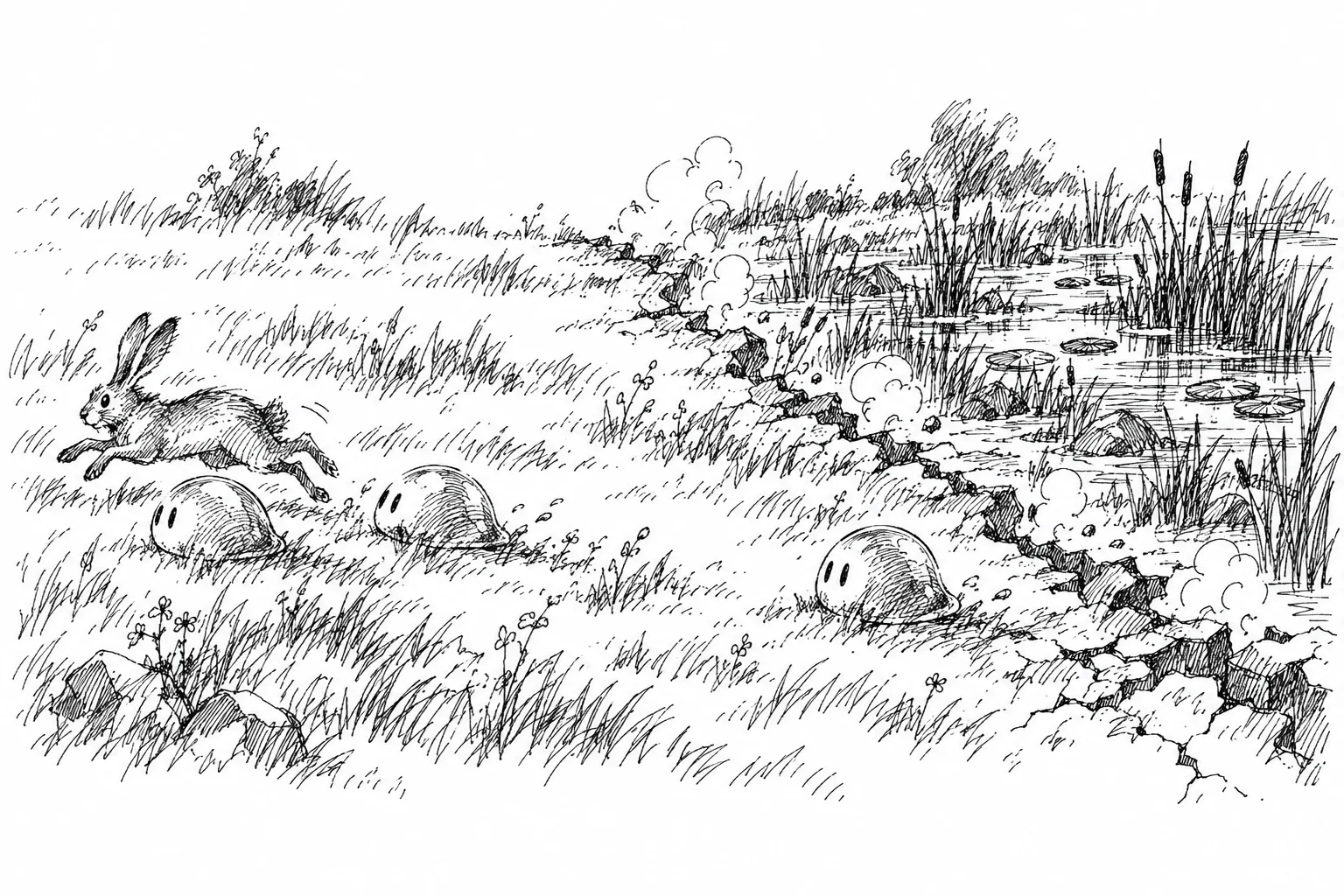
Field study · Ahead of the front, whoever can runs.

Three foragers were already running before I heard the rumble. The fourth was wounded and did not get out in time.