


Picking up, carrying and putting down
Each slime has one cargo slot.
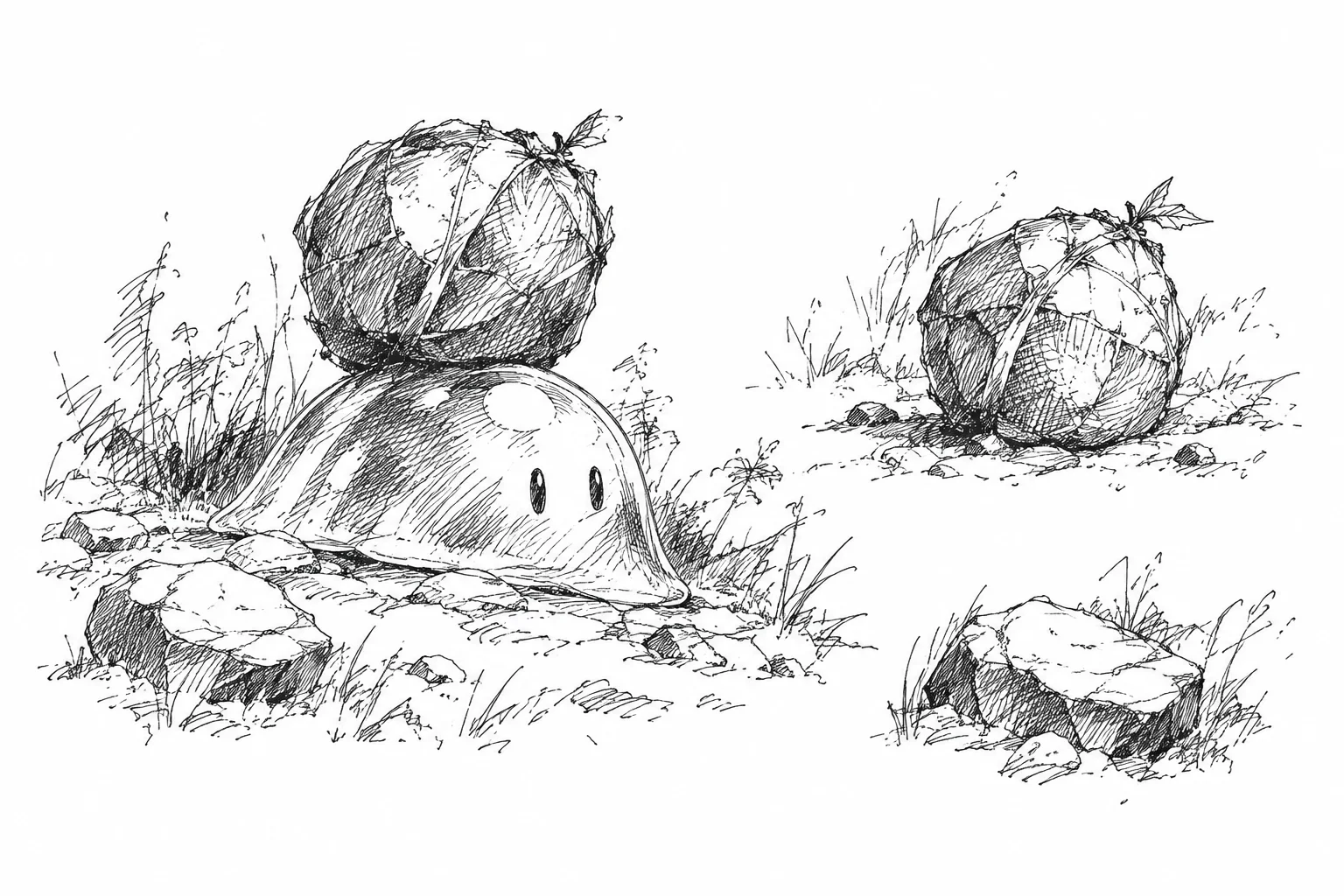
Each slime has exactly one place for cargo: a food parcel, some nectar, a stone or a glowing object, never two things at once. Holding [Shift] highlights everything that can be carried; a click picks it up or sets the load down in a suitable spot. [C] simply puts it down beside the slime.
A hungry slime eats at a food source first and only then takes the rest along. What it picks up becomes a universal food parcel: its origin no longer matters, any species can carry and use it, and mushrooms suit everyone too. Nectar remains nectar. It satisfies no hunger but is set aside for new nests.
Suitable ground
Parcels need a free, reachable tile of ground. Water, entrances, fixed obstacles, stones, deadwood, bushes and occupied spots are unsuitable. Small grass decorations do not change this rule. Parcels lie flat on the ground: a stone set down over one hides it until the stone is lifted again. Below ground, stores remain visible parcels in reachable chambers.

Four green parcels lay side by side in the chamber. I could no longer tell which had once been a water lily.
Stones and glowing objects
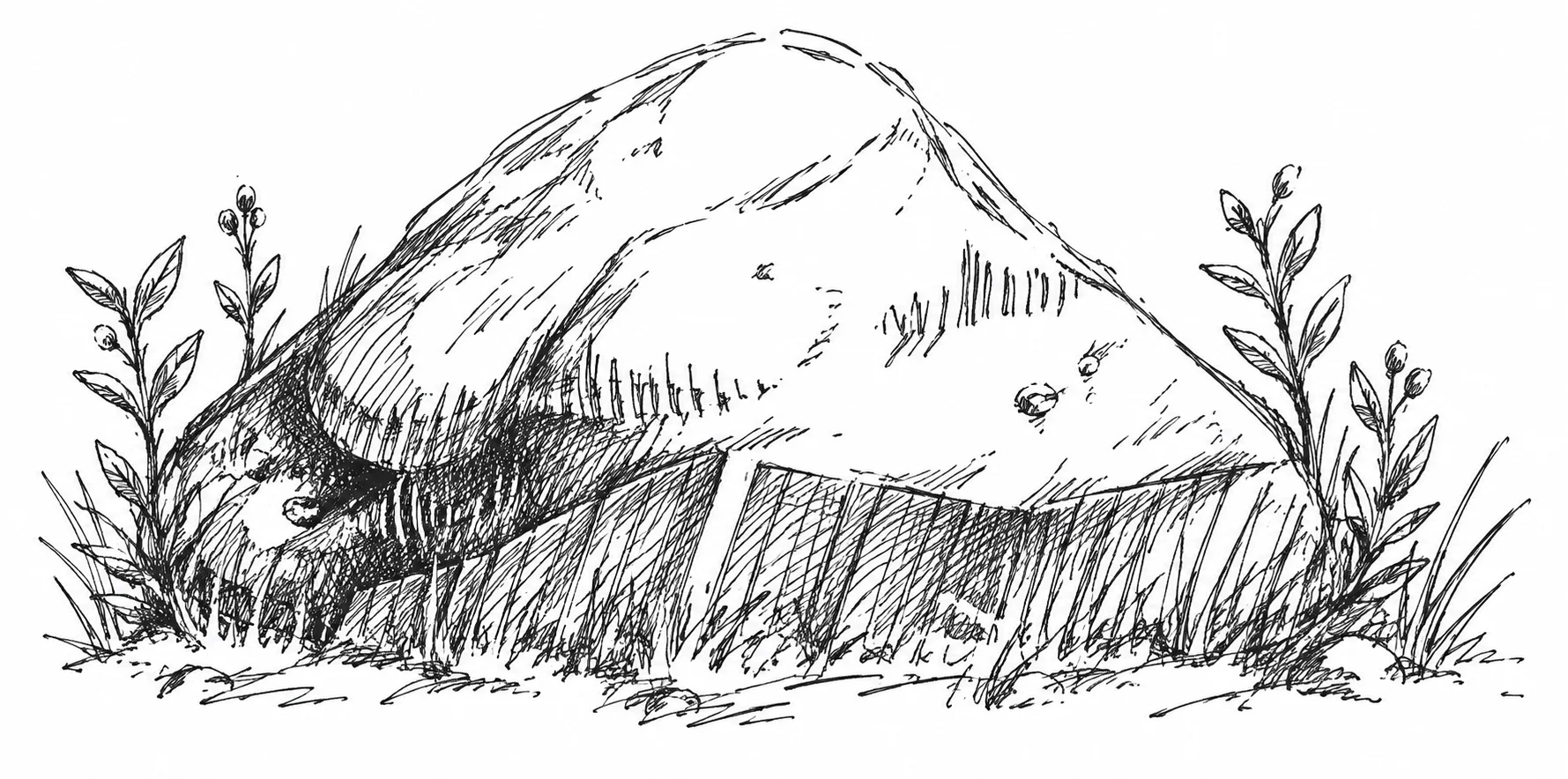
Movable stones share the cargo place with parcels. Their weight draws on energy, a little while standing, more in motion; an exhausted carrier slows down but never comes to a halt.
Glowing objects use the same place. They can be set down in a burrow as well as on the surface, and they keep their night light throughout: while carried, after being put down and even when their carrier dies.
Some stones have lain in place for a long time, and things have gathered beneath them: a small cache of food or nectar, occasionally something alive. Whatever a lifted stone uncovers then belongs to the open world.