


Forest hare
A swift forest animal that flees early and seldom remains easy prey.
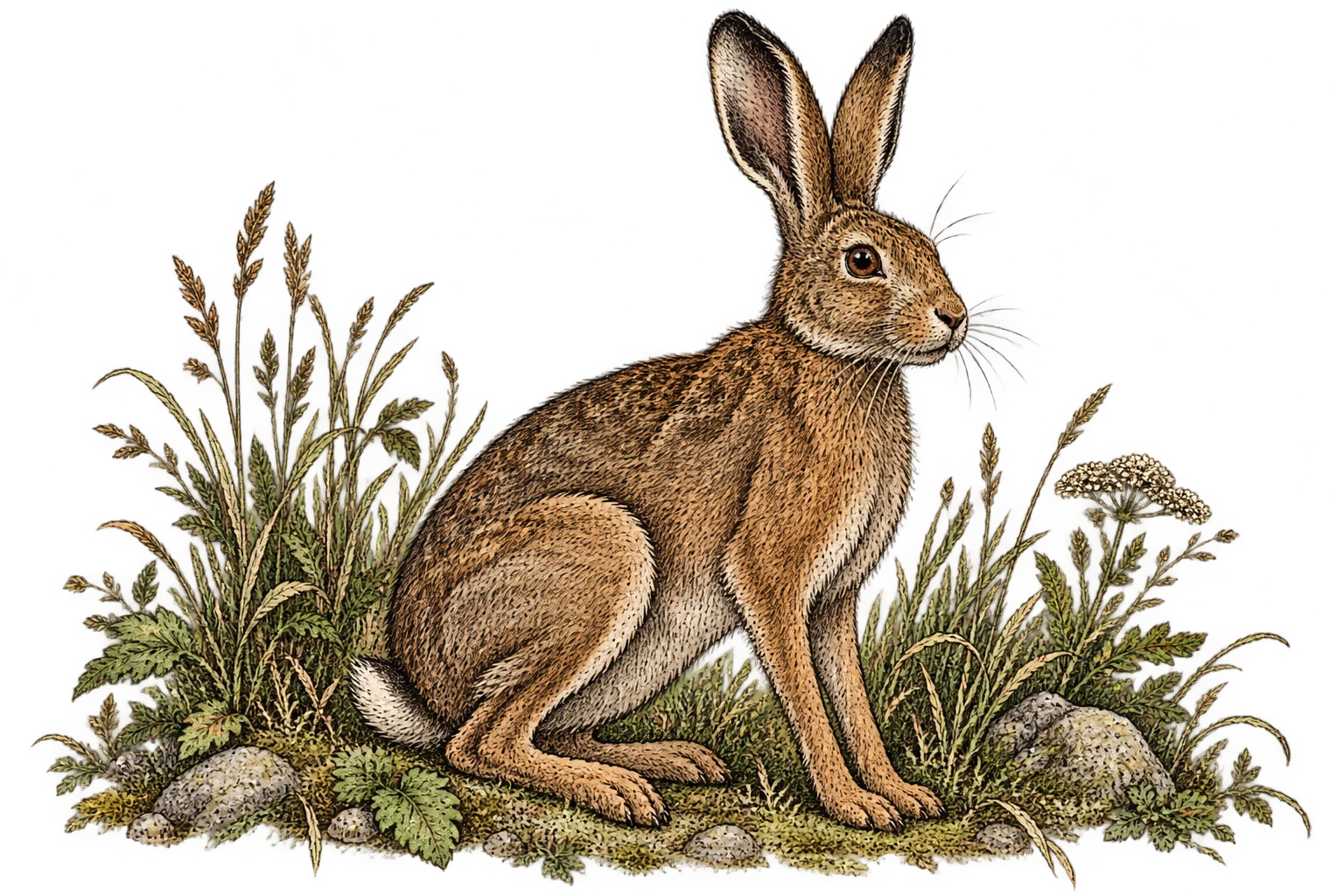
Forest hares alternate between quiet wandering, short sprints and sudden flight. They notice dangerous species nearby and quickly gain distance with their high escape speed. Magma can hunt them, but a long straight chase often ends when the prey leaves their sensing range. Hares rest more often at night and in rain; neither slows an immediate escape.
Population and return
Forest hares age and can leave carrion after hunting, combat or natural death. When their numbers grow small, individual animals may arrive in suitable, undisturbed parts of the forest after long intervals. They can return even after the last hare has gone, provided the species belongs to this world. Immigration remains limited: it does not refill a whole forest at once and can cease when suitable habitat is unavailable. Their small bodies provide less food than deer or boars.
Attack and pursuit
A struck rabbit seeks distance instead of fighting back. Even a slime it would not usually fear can send it fleeing with a blow.
A swift territorial woodland resident may also give chase. A rested hare runs faster, but prolonged flight consumes stamina. Only severe exhaustion sharply reduces its speed. Rest and slow movement restore its reserves.
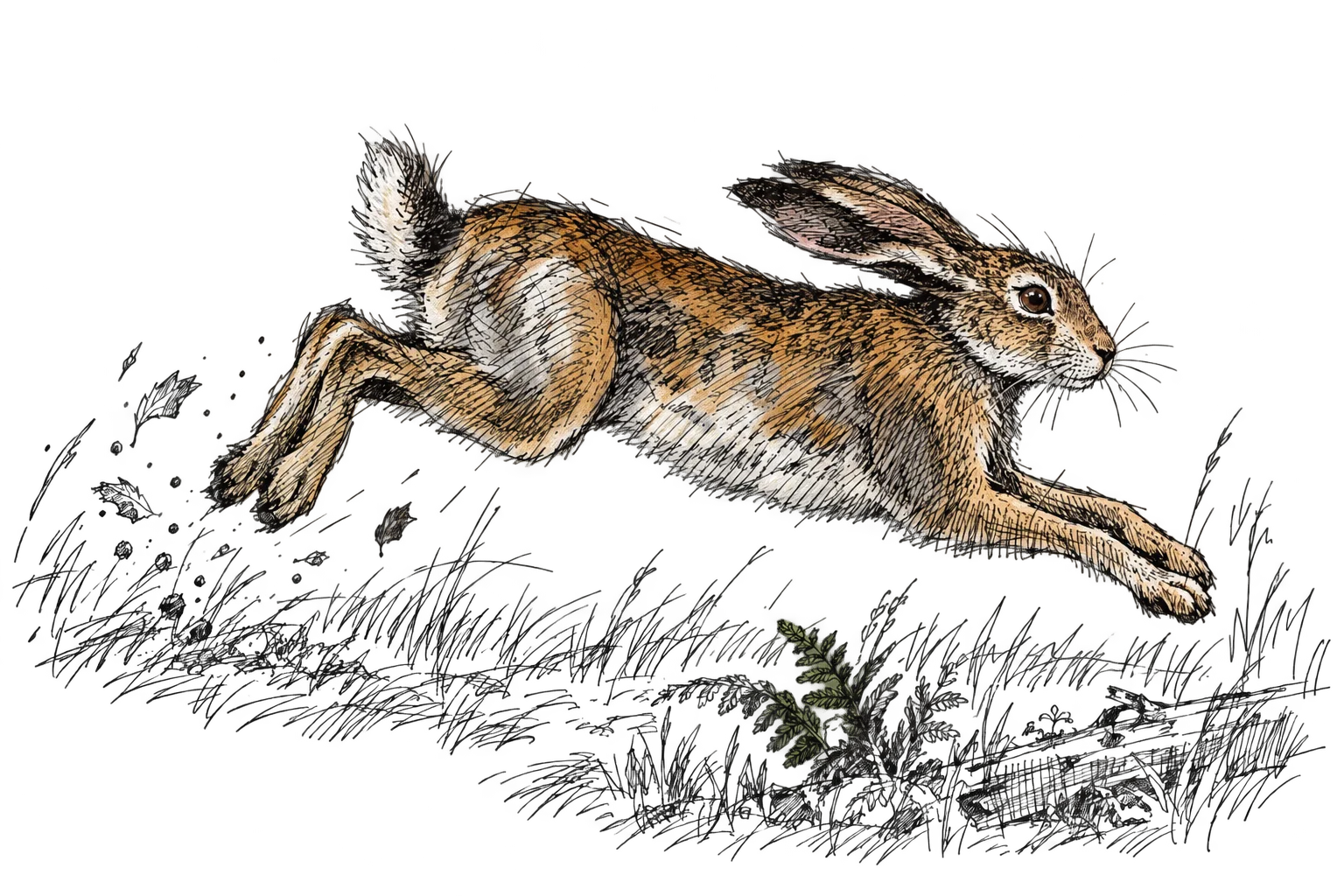
Flight study · Only a long flight slows it down.

A Magma chased a hare across half the clearing. In the end it stood alone in the grass, and the hare was gone.