


Founding additional nests
Nectar and first exploration fill the way to a founding right. A new entrance grows into another nest.
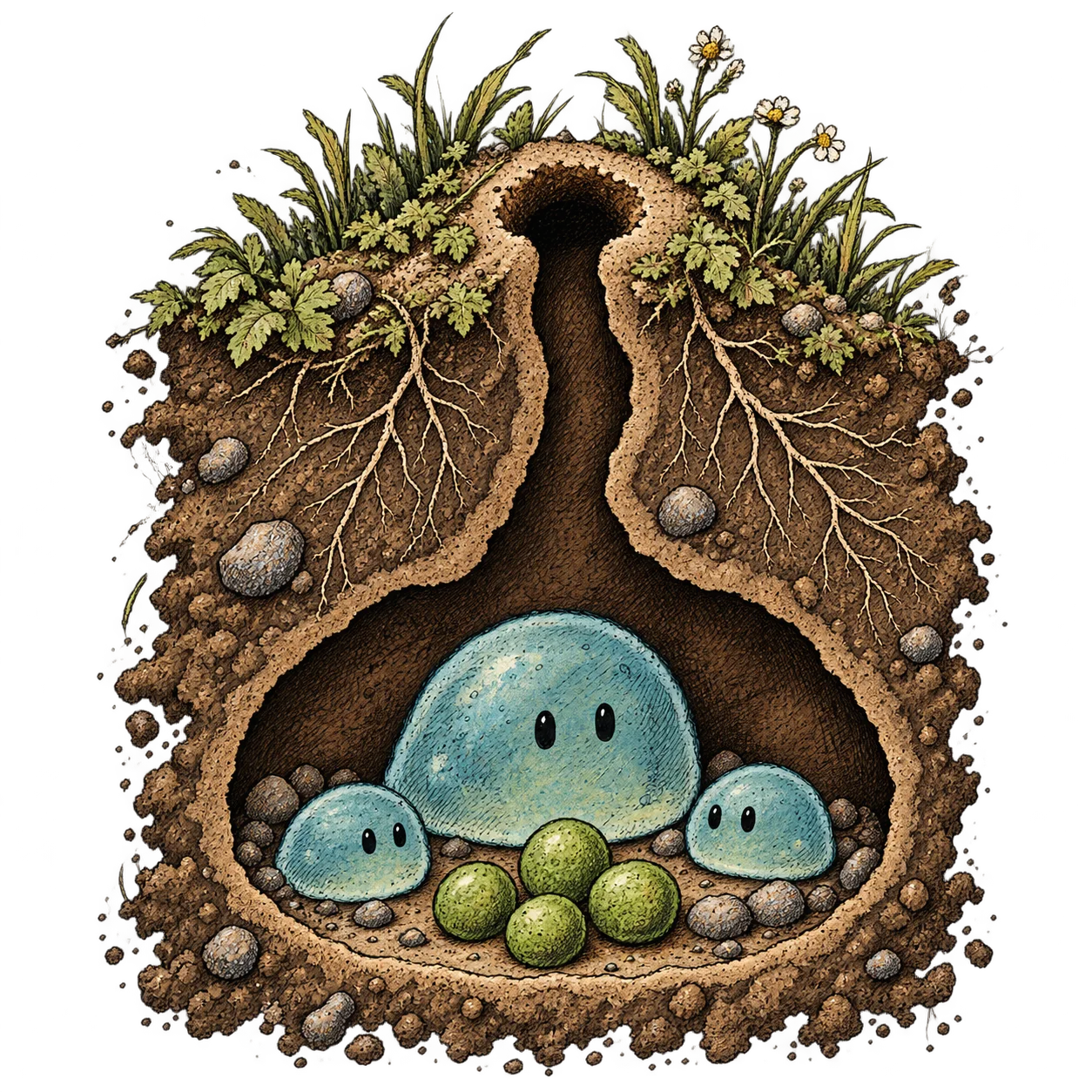
Plate II · From entrance to inhabited nest Schematic cross-sections, not a construction plan to scale.
The founding right
Another nest requires a founding right. A colony with a living queen acquires one as soon as its founding progress is full, and two paths fill it: stored nectar and first-time exploration of the surface. Once the progress is full, the exploration share is used up first; the colony pays the missing rest automatically from its nectar reserve. The right is kept until it is needed. Merely carrying nectar is not enough: it must reach the nest, and ordinary food cannot replace it.
Exploration as a source
Exploration is a finite source. Each species counts only land it sees for the first time itself, whether a controlled slime, an autonomous forager or an escort reveals it; land another species already knows is still new to it. Once its own surface is largely known, exploration adds little, and nectar becomes the regular source of new nests. Exploration alone never fills the progress completely; every right also needs some nectar.
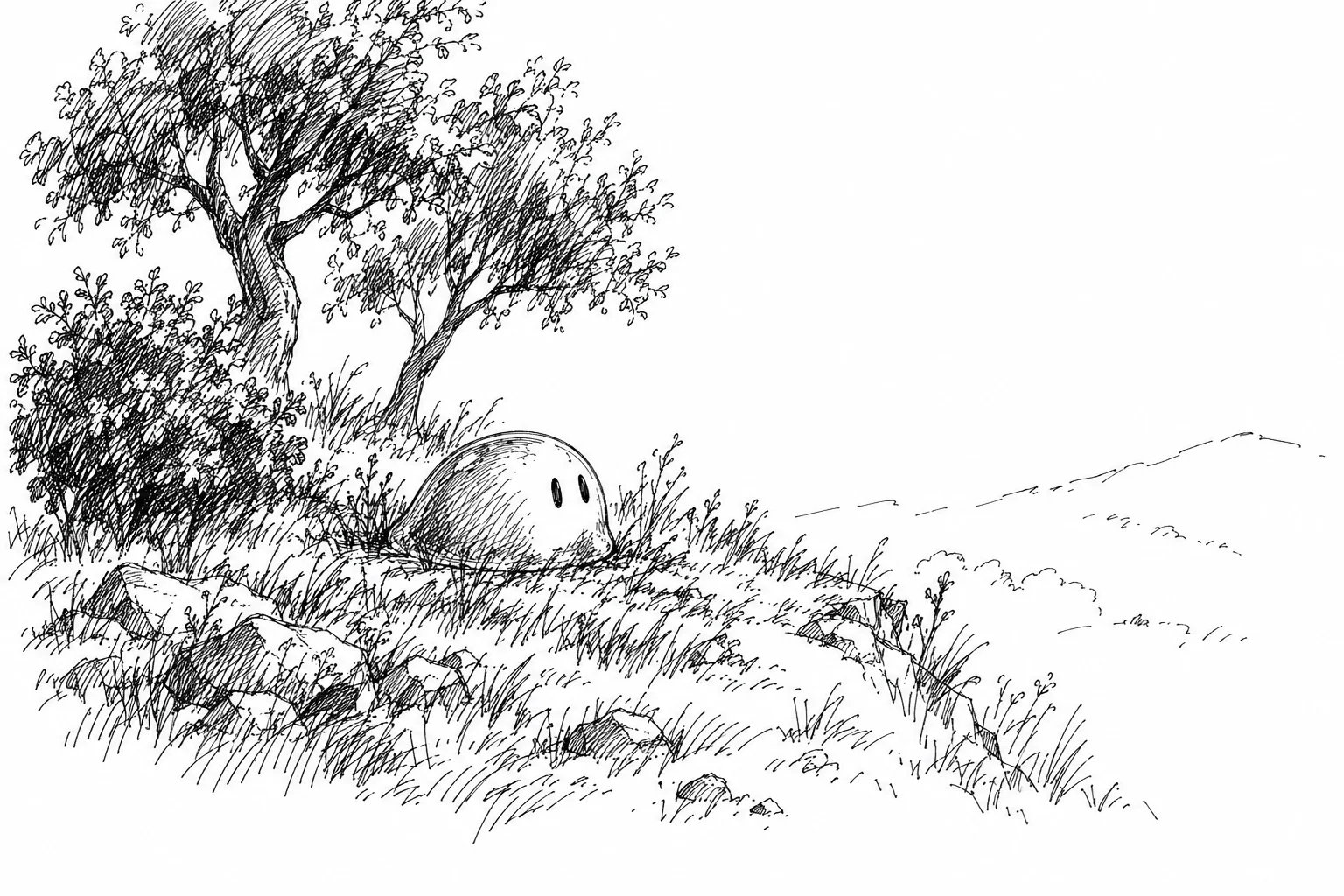
Field study · Where the drawing ends, unknown land begins.
Price and progress
The nectar price depends on the species and its living population: a larger population needs more nectar, while the number of existing nests plays no part. A display shows how far the progress has come and what share exploration and nectar have in it. A victory over an enemy queen grants a right at once and leaves the progress untouched. If the colony no longer has a living queen, nectar first serves to replace a queen in an existing burrow; the display then shows that need.
From right to nest
With a right available, [N] reserves another site. Construction then begins: an entrance in the ground, a shaft and a first chamber. Only in this prepared space can one of the colony's own become a queen. The first foundation at the start of a journey needs no founding right yet. Once the queen has risen, the new nest carries its biome into the surroundings, and the conversion front strikes everyone it overtakes on the surface, the colony's own slimes included.
Neutral ground
The influence of a foreign nest without a living queen counts as neutral for founding. Within that area, no connection to your own biome is required, and queenless foreign influence demands no protective distance. The biome actually present at the site determines its territory: a nearby living queen from another biome does not cancel the exception. Normal connection rules return when a queen reclaims the abandoned territory. A founding right, walkable ground, your own burrow, a free chamber and distances from your own nests, queens and construction sites are still required.
Room for the chamber
The new chamber is planned in a free space near the intended shaft. Suitable nearby spaces take priority; a crowded burrow is not bypassed by moving the chamber to its far end. If no suitable space exists nearby, a nest cannot be founded there. The distance from living queens of the same colony in that burrow is still required.
1 · Entrance

A suitable site becomes a place of work.
2 · Shaft
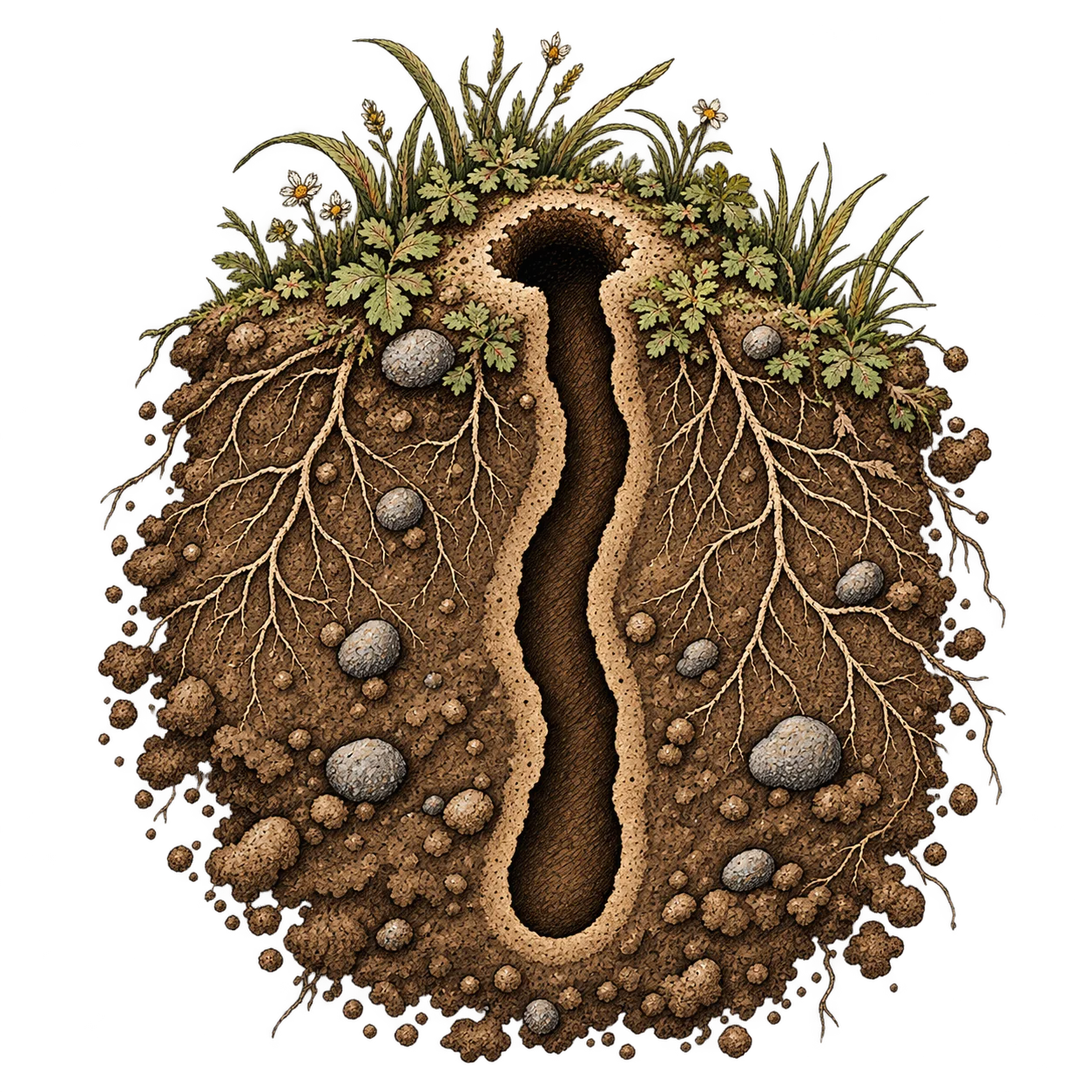
A passage leads down from the surface.
3 · Chamber

A sheltered space is dug beneath the entrance.
4 · Queen
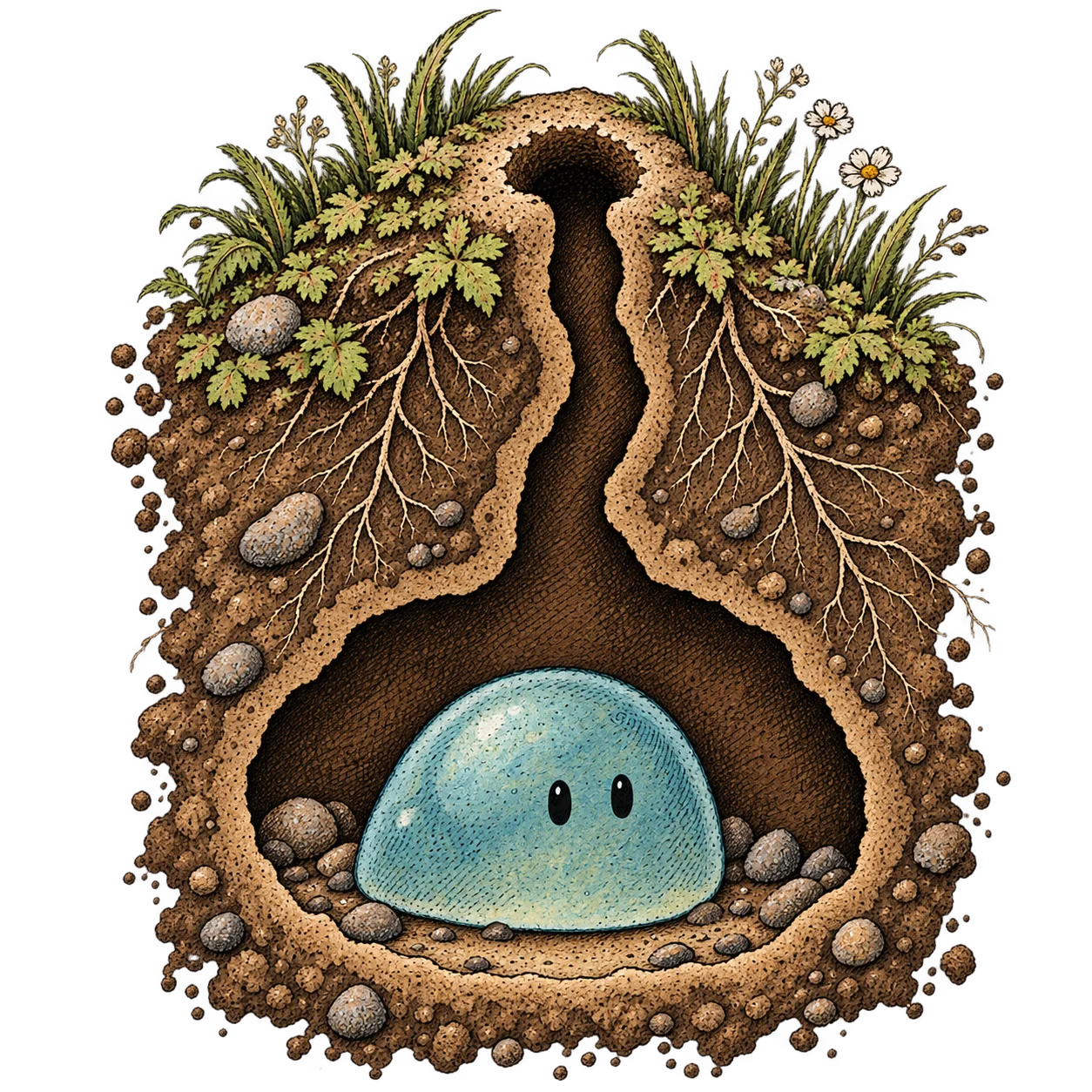
A member of the colony rests and becomes a queen.
5 · Nest
The new nest belongs to the founder's species.
Rules
The founder's species matters, not the biome: a nest founded by Aqua in the desert remains Aqua.
A resting member of the colony becomes the queen in the chamber; she does not need to be escorted there.
Movement or an attack interrupts the required rest.
In founding mode [N], the game marks up to three already explored sites (1–3) where a foundation would be possible under the same rules. They are hints only: founding still happens through your own placement.