
Rat
A rat is no rival for a nest, but a roaming predator of immense strength.
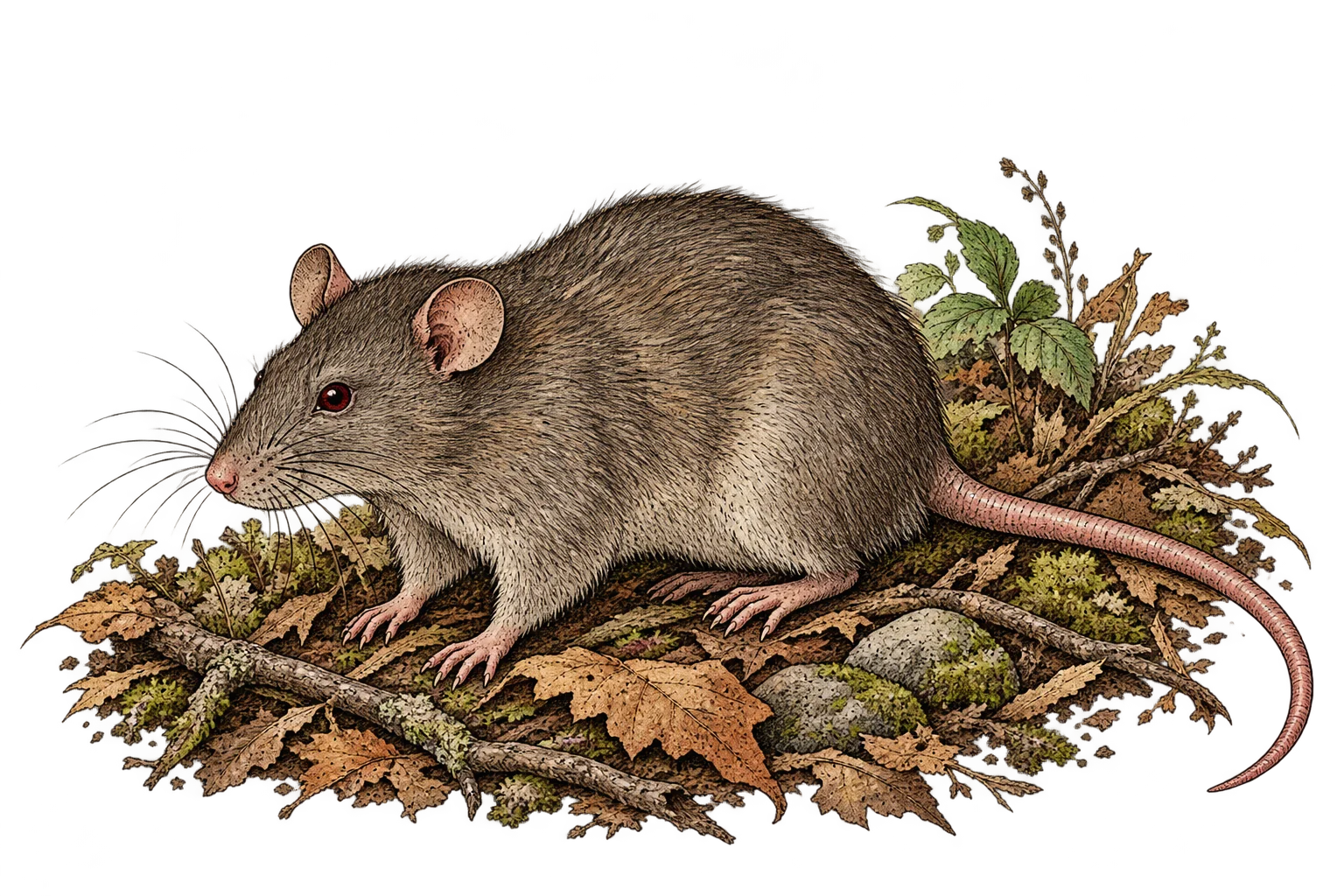
Rats enter the world from beyond the map. They roam for a time, scent slimes from a great distance, and pause to fix on prey before a swift lunge. While roaming they walk at an easier pace and stop to sniff. Water does not stop them, but it slows them: there they wade and cannot sprint, so a running slime can escape them in water.
A rat does not stay forever. It may sleep between hunts, then seek the map edge and disappear for a while. A lone slime is little more than prey to it. Autonomous colonies recognise its presence as a reason to seek shelter in a nest, if they know a reachable entrance.
A danger with a rhythm
A sleeping rat is no assurance of safety. Each visit has its own waking, hunting and departure phases. Watching that rhythm explains why the same ground may seem safe for a time, then be avoided again.
Meeting a colony
The rat hunts slimes of every species and devours its kills entirely instead of leaving a carcass. Its great health and powerful bite can wound even a led group. If defeated, its large body remains as rich carrion; the rat itself stays away for a longer interval, and later another visit may begin at the map edge.
The great rat can also be deliberately attacked. A blow wakes it from sleep and may turn its bite towards the attacker. Its robust body and strong defence make it a risky opponent for a single slime. When badly wounded, it may retreat.


The rat slept through the rain. No forager dared pass it, though it lay still for a long time.